Q1: What is the difference between 5‑layer and 3‑layer sintered mesh?
A: 5‑layer mesh adds transition layers that trap particles progressively, delivering 3‑5× higher dirt‑holding capacity and better pore uniformity than 3‑layer. 3‑layer is lighter and has slightly lower initial ΔP, but is best for clean service or low‑pressure applications. For most hydraulic and chemical uses, 5‑layer is recommended.
Q2: Can this filter be used for both liquid and gas?
A: Yes, but gas service requires vertical orientation with open end up to drain coalesced liquid aerosols (oil mist or water fog). At high gas velocities (>10 m/s), inertial impaction may capture particles smaller than the rated pore size. For high‑purity gas, specify electropolishing.
Q3: What flange standards are available?
A: We offer multiple flange configurations to match your pipeline specifications:
- ANSI/ASME: Class 150, 300, 600, 900, 1500
- DIN: PN6, PN10, PN16, PN25, PN40, PN64
- JIS: 5K, 10K, 20K, 30K
- Custom: Designed to your specific bolt pattern, facing, and dimension requirements
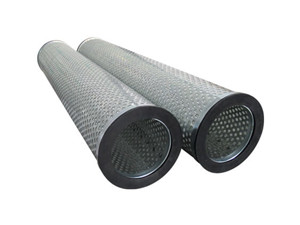
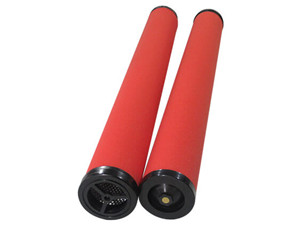
Major connections include universal interface for filter elements (215, 220, 222, 226, etc.), flanged joint, and other special interfaces that can be customized.
Q4: How does pore size tolerance affect my filtration reliability?
A: Sintered mesh achieves pore tolerance of ±3 μm (e.g., 20 μm nominal = 17‑23 μm actual). This ensures consistent particle retention across the entire element surface. Woven mesh can have wider variation and may shift under pressure, making sintered mesh the choice for absolute-rated applications.

(1).jpg)

.jpg)
.jpg)
.jpg)


.jpg)
.jpg)
.jpg)
.jpg)